Globe Stocks Daily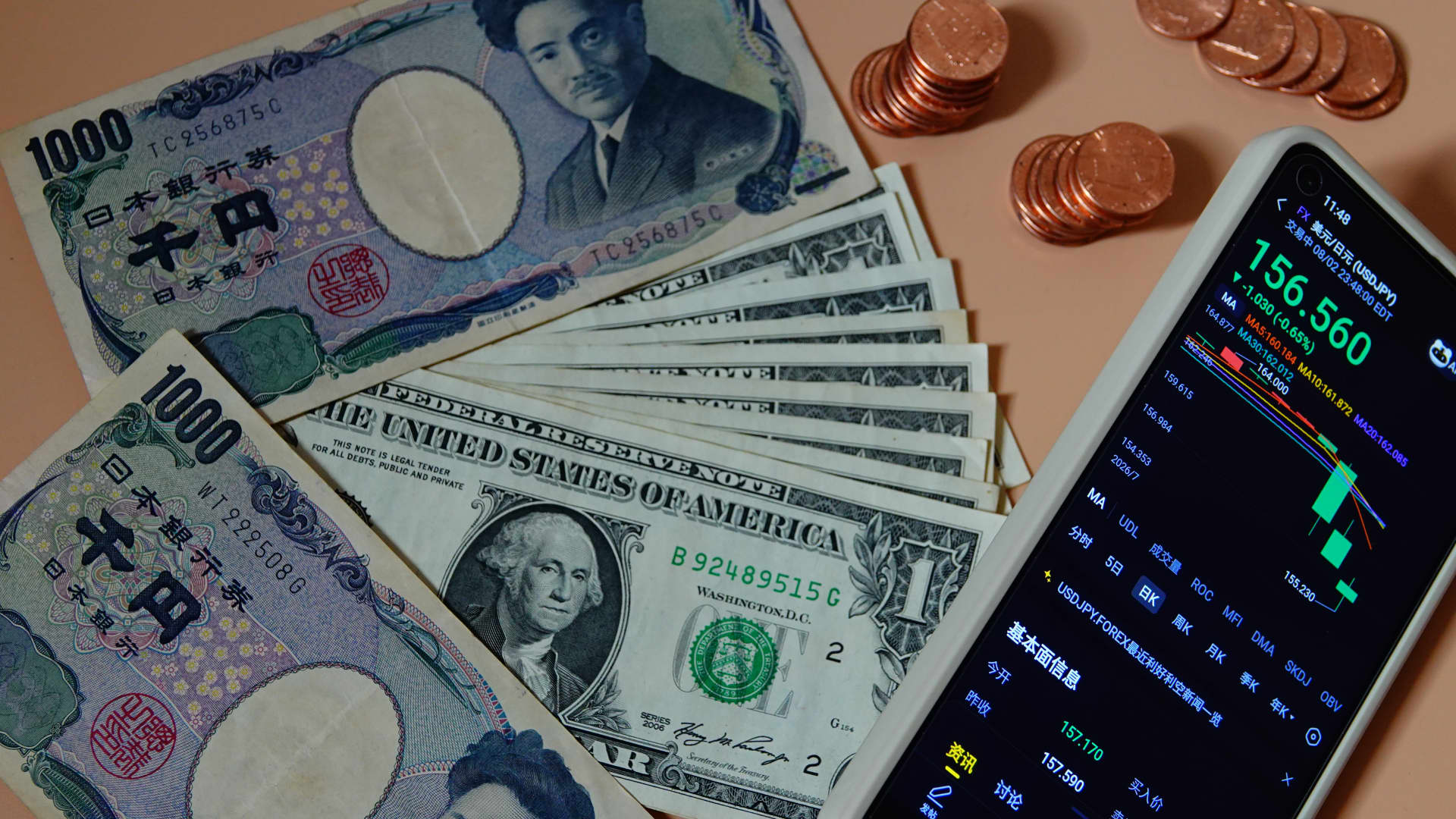
The Japanese yen steadied near its strongest level since February on Wednesday, keeping the dollar on the defensive as traders grappled with oil prices pushing towards $100 per barrel in the face of a widening war in the Middle East. Iranian-backed Houthis in Yemen launched strikes on several Saudi cities, further embroiling a U.S. ally in the over six-month-long conflict, while U.S. forces hit multiple Iranian oil tankers and Iran targeted a U.S. base in Jordan. That pushed Brent crude futures up over 1.48% to $99.37 per barrel, casting a shadow over global markets ahead of a U.S. inflation report on Friday that will set the stage for central bank meetings next week in the U.S. and Japan.
The reaction in the currency market was to push the dollar modestly lower, although some analysts attributed that weakness to the rapid rise of the yen in the past week. The euro was steady at $1.1631, while sterling last bought $1.3546. The dollar index, which measures the U.S. currency against six of its key rivals, was at 98.15, close to its lowest level in almost two weeks.
OCBC strategists said the latest escalation keeps Fed policy implications from higher energy prices in focus, particularly after last week's strong U.S. payrolls report revived expectations of another rate hike. The spotlight has been on the yen on the back of its 4% rise in September, shifting the calculus for the carry trade. The yen was firmer at 153.65 per U.S. dollar, close to the seven-month high of 152.89 it hit on Tuesday.
The rally has been broad-based, with the yen gaining against the euro, sterling, and popular carry-trade targets such as the Mexican peso and Turkish lira. This move has been fueled by expectations of faster Bank of Japan tightening, prospects of Japanese investors repatriating overseas funds, and pressure from Washington for a stronger yen. Traders widely expect the BOJ to raise rates by 25 basis points at its September 17–18 meeting, but the rally will hinge on whether Governor Kazuo Ueda follows through with hawkish comments.
Meanwhile, the Australian dollar rose 0.12% to $0.7225, and the New Zealand dollar was 0.16% higher at $0.5862.
Source: cnbc.com